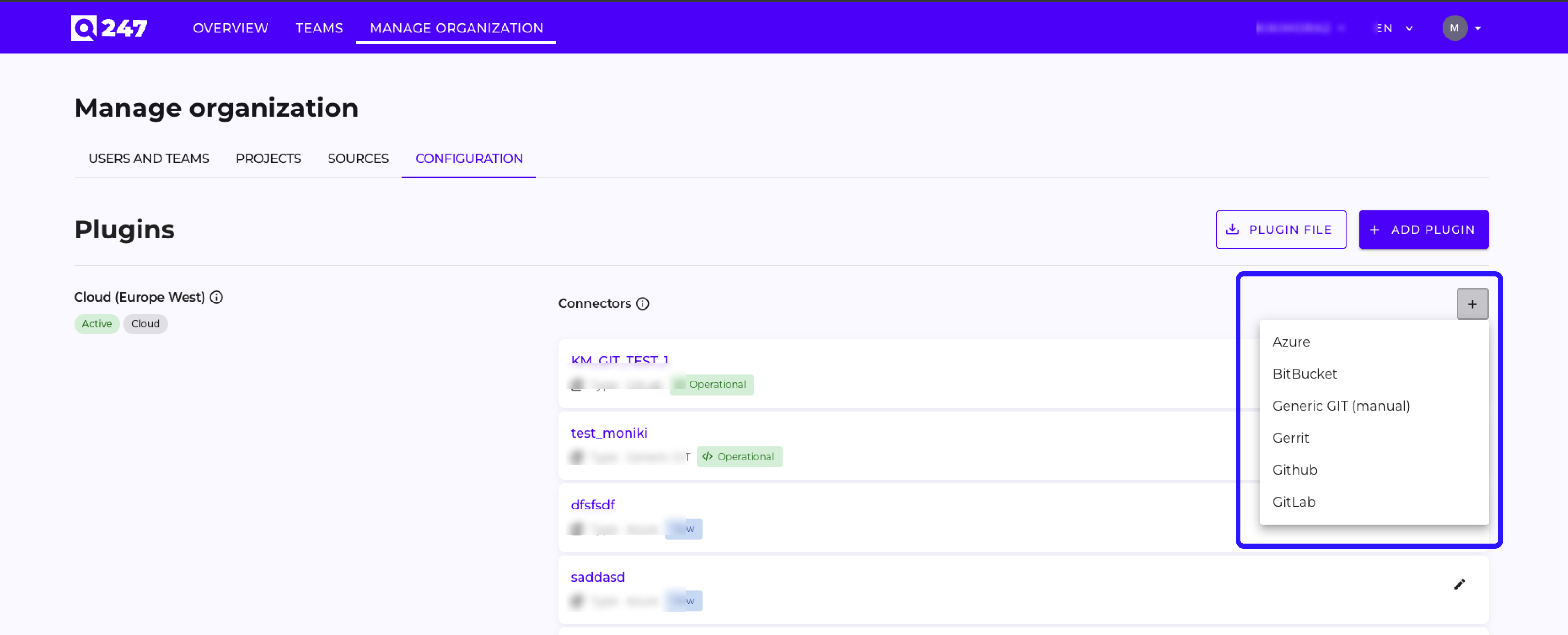
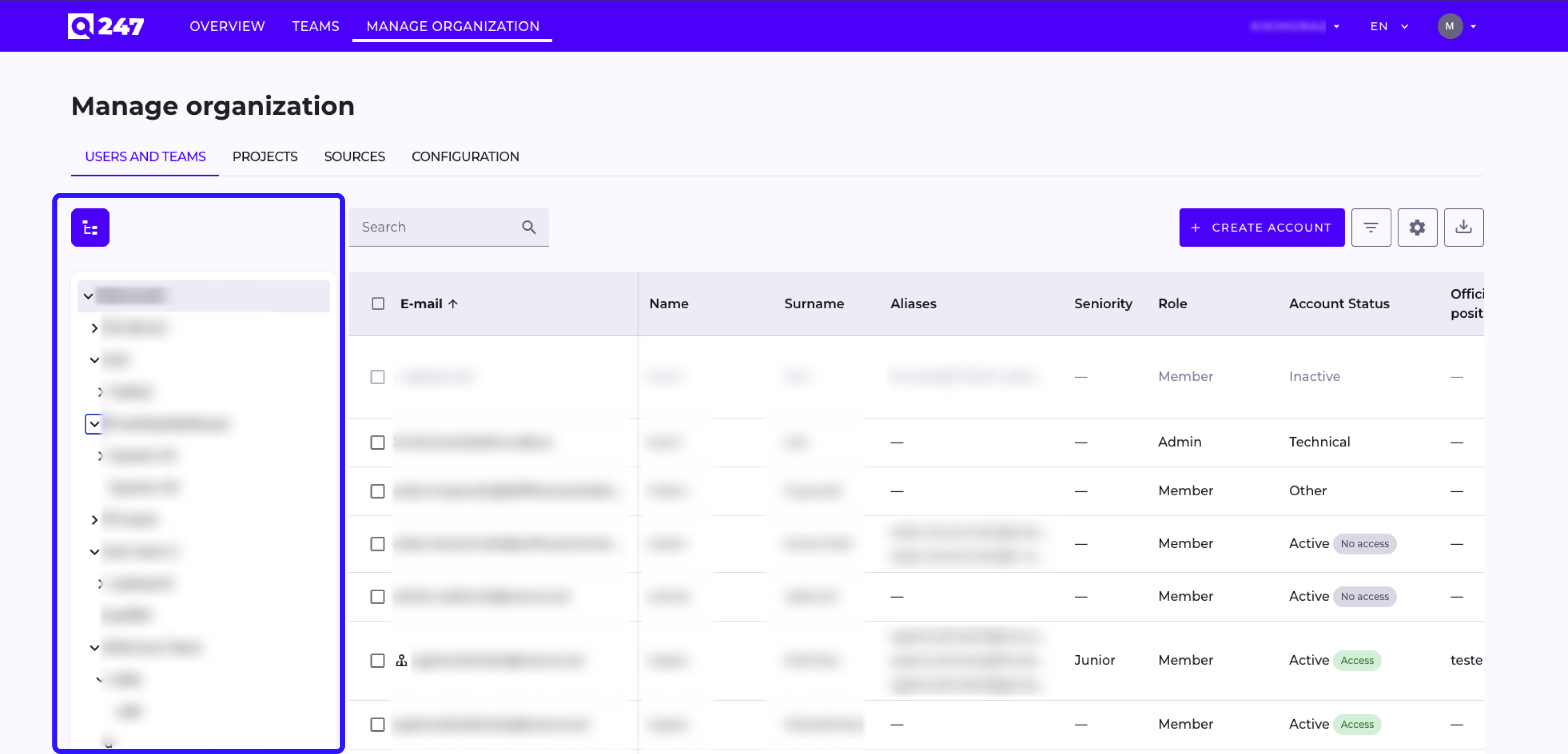
Version v2.7.0

Version 2.7.0 introduces Health Metrics, an assessment of project and team health. Five metrics show where the way of working needs attention, and the assessment is visible on the Overview, in the Teams view, and on individual project and team pages. Calories now also include work in Azure Boards and on Azure Wiki pages, and you can pull data from Jira via API, without configuring webhooks.
Below you will find a detailed description of the most important changes.
New Features
Health Metrics
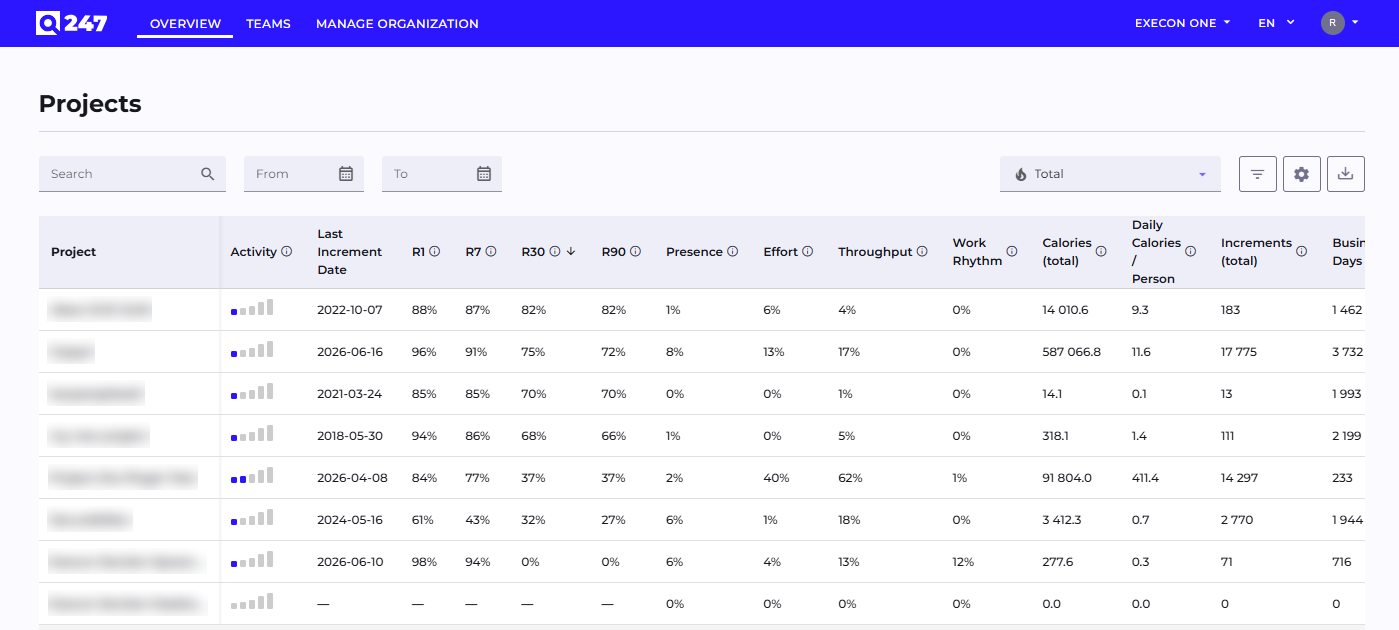
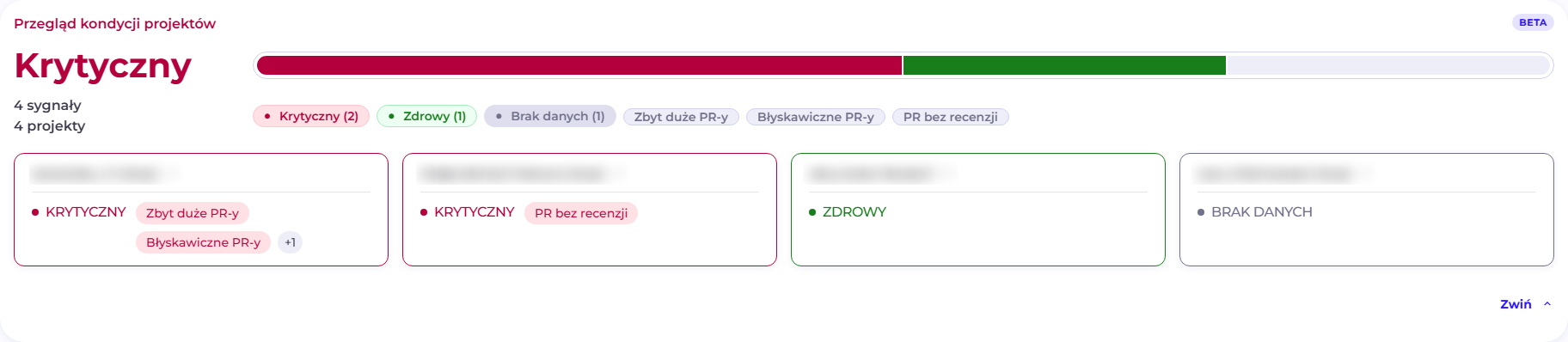
A new component shows in one place how work is organized across projects and teams. On the Overview, it appears as the "Project health summary" and assesses the projects the user has access to. In the Teams view, under the name "Team health summary", it lets you step through the organization structure level by level. On the page of a single project or team, it shows the status of that node together with the metrics that need attention.
-
Five health metrics. Q247 assesses:
- Oversize PRs
- Unreviewed PR
- Stale PRs
- Lightning PRs, meaning merged without review almost immediately
- Overtime Activity
The first four metrics are calculated from Pull Requests, and Overtime Activity from events in commits and in documentation.

- Project and team assessment. Each metric gets its own status based on the organization's thresholds: Healthy, Watch, or Critical. The assessment of the whole project or team is the status of the worst assessed metric, so a single metric in Critical status is enough to make the whole node Critical. Metrics without a sufficient data sample do not take part in this calculation.
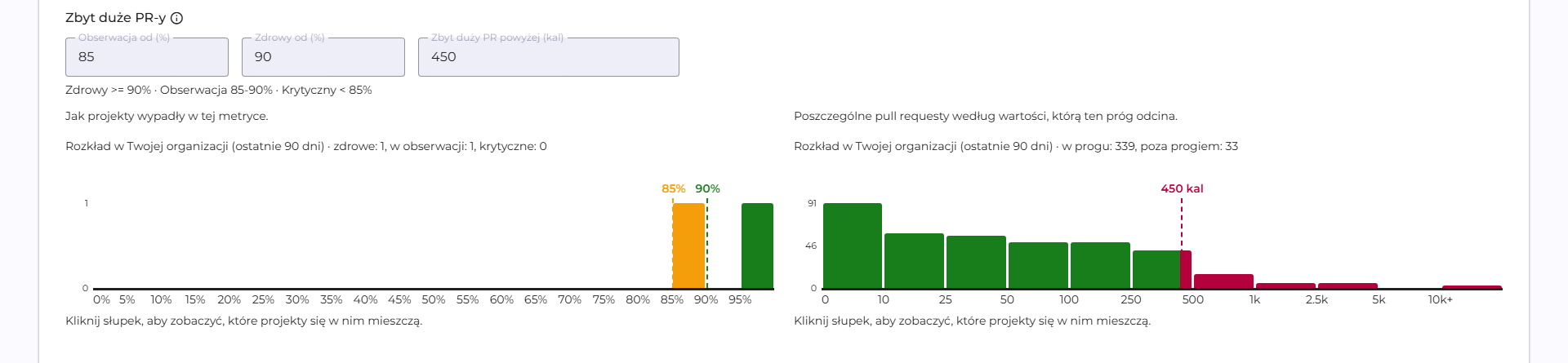
- Thresholds tailored to the organization. The administrator sets the thresholds for each metric in Manage Organization, in the Configuration section. Opening the edit view shows the distribution of the organization's actual data from the last 90 days next to the threshold fields, and the threshold markers move on the chart as you enter the values. Metrics with their own value threshold, meaning Oversize PRs, Stale PRs, and Lightning PRs, have an additional chart showing how many Pull Requests that threshold cuts off. The default thresholds are a proposal for the beta period, chosen from a data sample, and we are still calibrating them.
- "No data" status for a sample that is too small. A project or team without enough data for the assessment to be meaningful gets a separate status and its own position in the summary. Such a node does not affect the assessment of the others or the choice of thresholds.
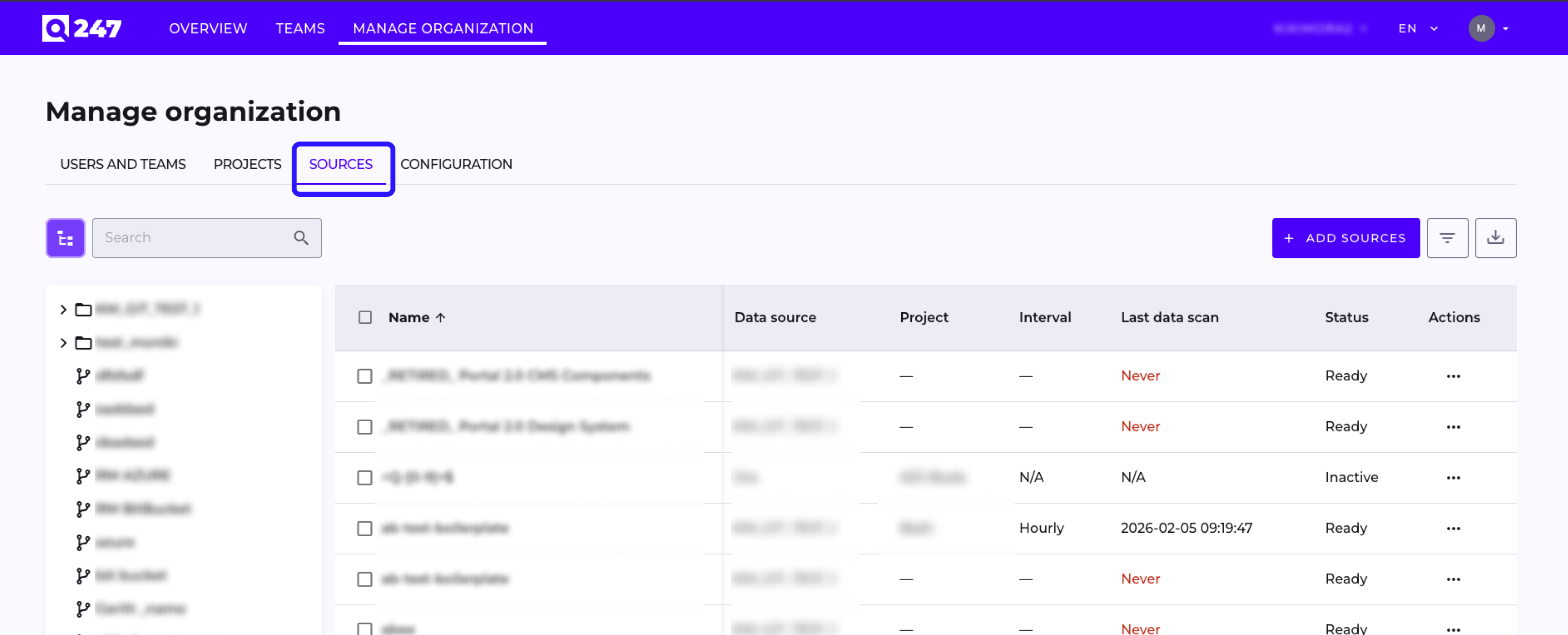
- Excluding repositories from the assessment. The administrator can mark repositories where assessing the way of working does not make sense, for example automation and infrastructure repositories. The setting is on the Sources list, in the Health Metrics column, and it can be reverted at any time. The exclusion covers only Health Metrics, the repository's other statistics stay unchanged.
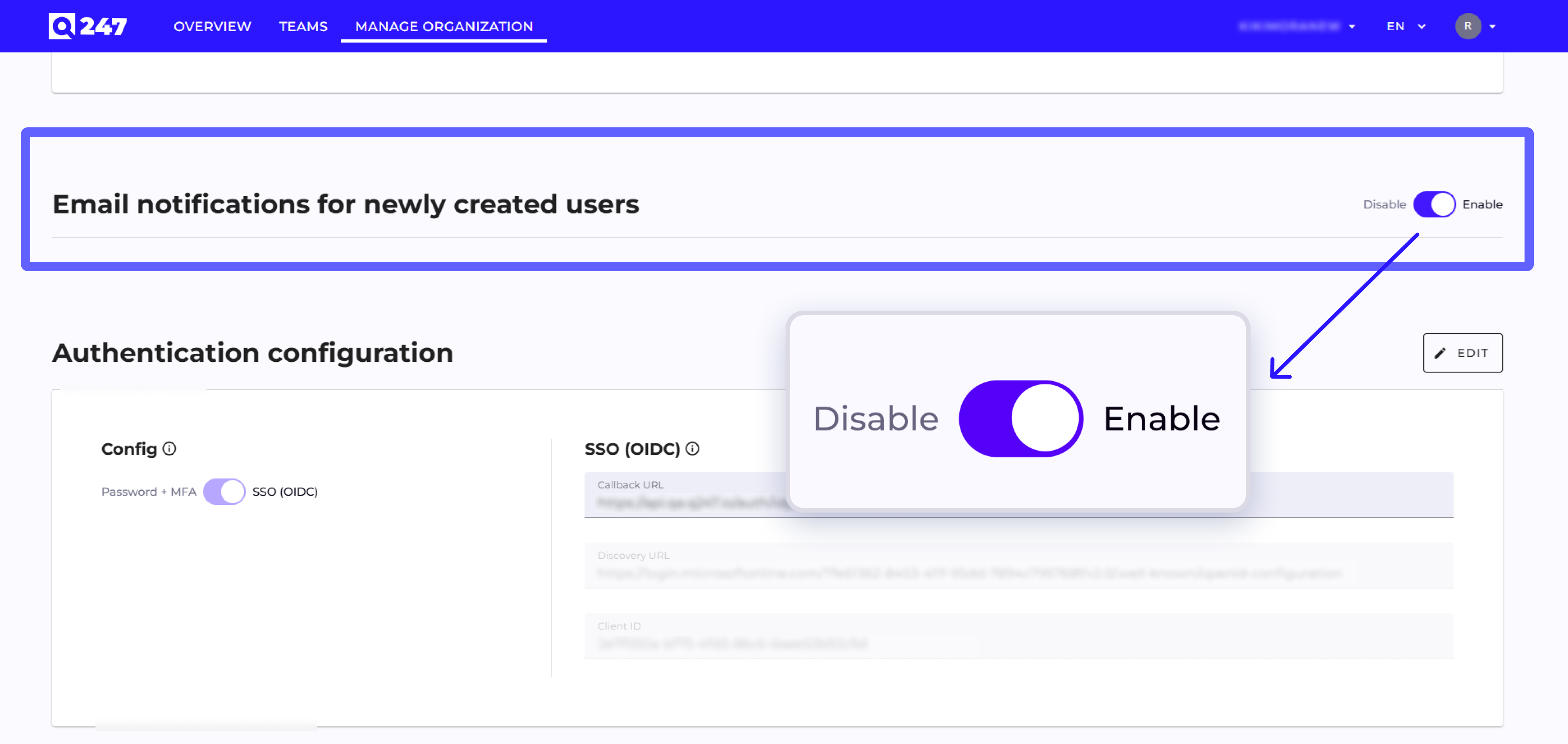
- Enabling the module and visibility scope. Health Metrics is enabled with the "Show Health Check" toggle in Manage Organization, in the Configuration section. The module works from Enterprise Plugin version
q247-enterprise-plugin-linux-v2.4.2, released in the previous version, and the component stays hidden on older versions. On the Overview, it is visible to people with access to the whole project, and in the Teams view, to people managing at least one team. Everyone sees the health calculated from their own scope.

Learn more: Health Metrics
Calories from Azure Boards and Azure Wiki
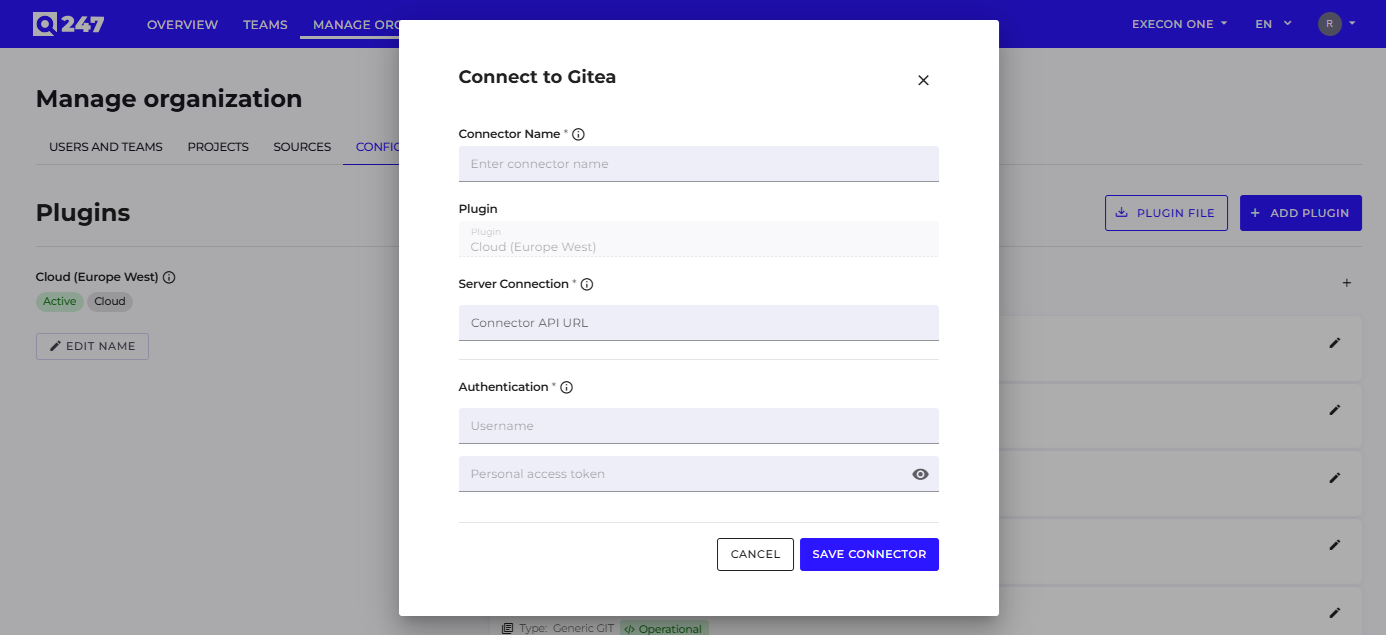
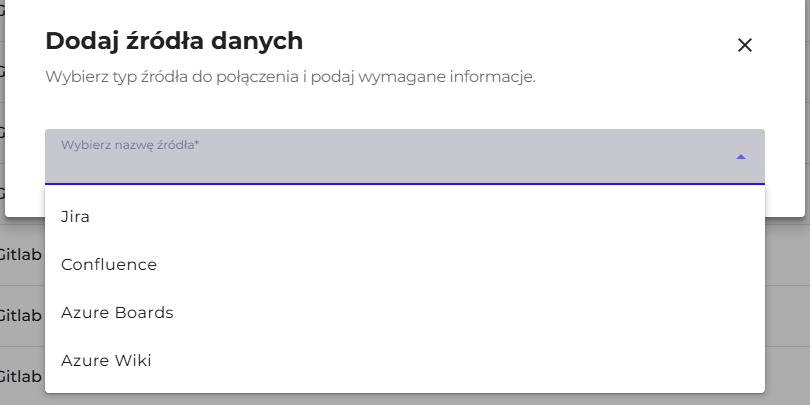
Q247 now calculates calories from work in Azure Boards and on Azure Wiki pages as well. Activity from both sources enters calories under the same rules as work in Jira and Confluence, so it appears in the same views and filters as before. Both sources are connected through a single Azure DevOps connection in Manage Organization, in the Configuration section, and then assigned to projects on the Sources list. The first version covers Azure DevOps Server 2022 in the on-premise variant.
Learn more: Azure Boards
Pulling data from Jira via API
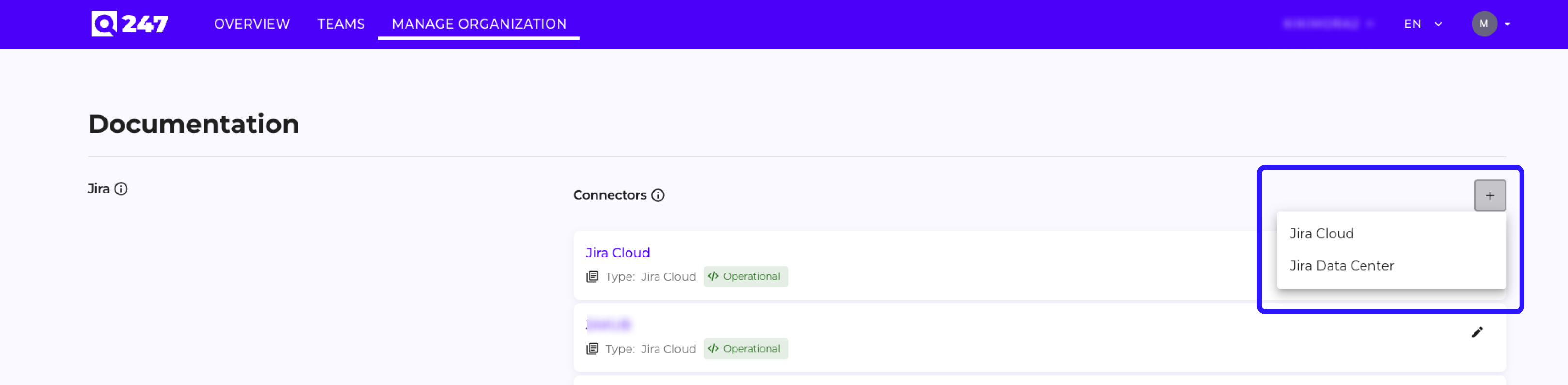
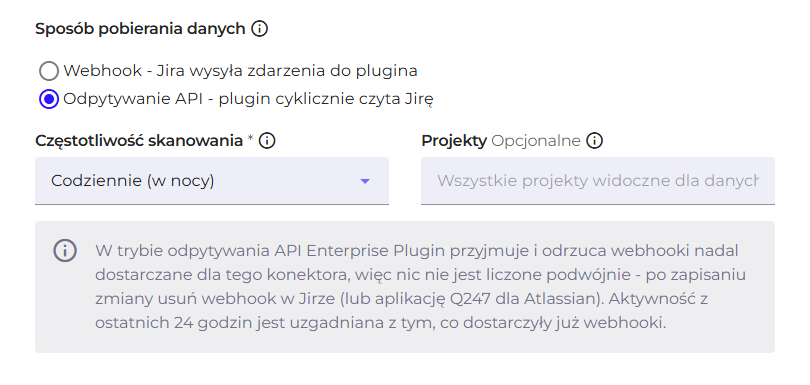
The Jira connector can now pull data directly via API. Configuring webhooks on the Jira side is no longer needed, which shortens deployment and removes the dependency on Jira administrator permissions. The pull frequency is set in the organization panel, every hour or once a day. The mode works with Jira Data Center and Jira Cloud.
Learn more: Ingestion method
Improvements
Selecting a date range with a single selector
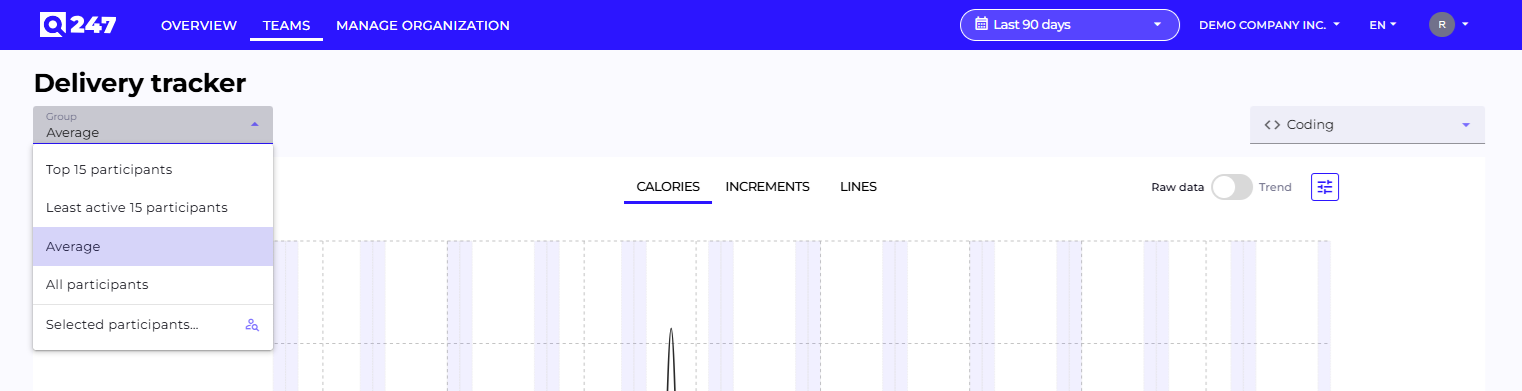
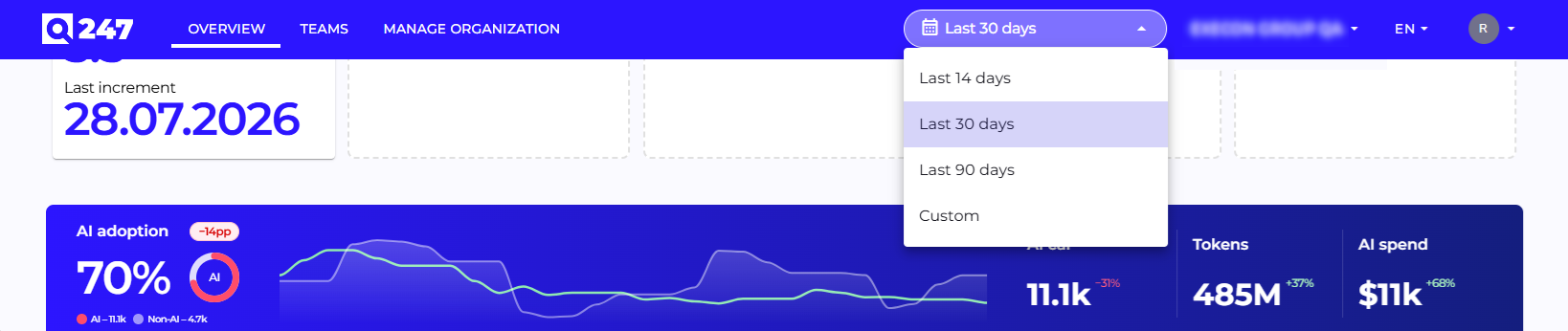
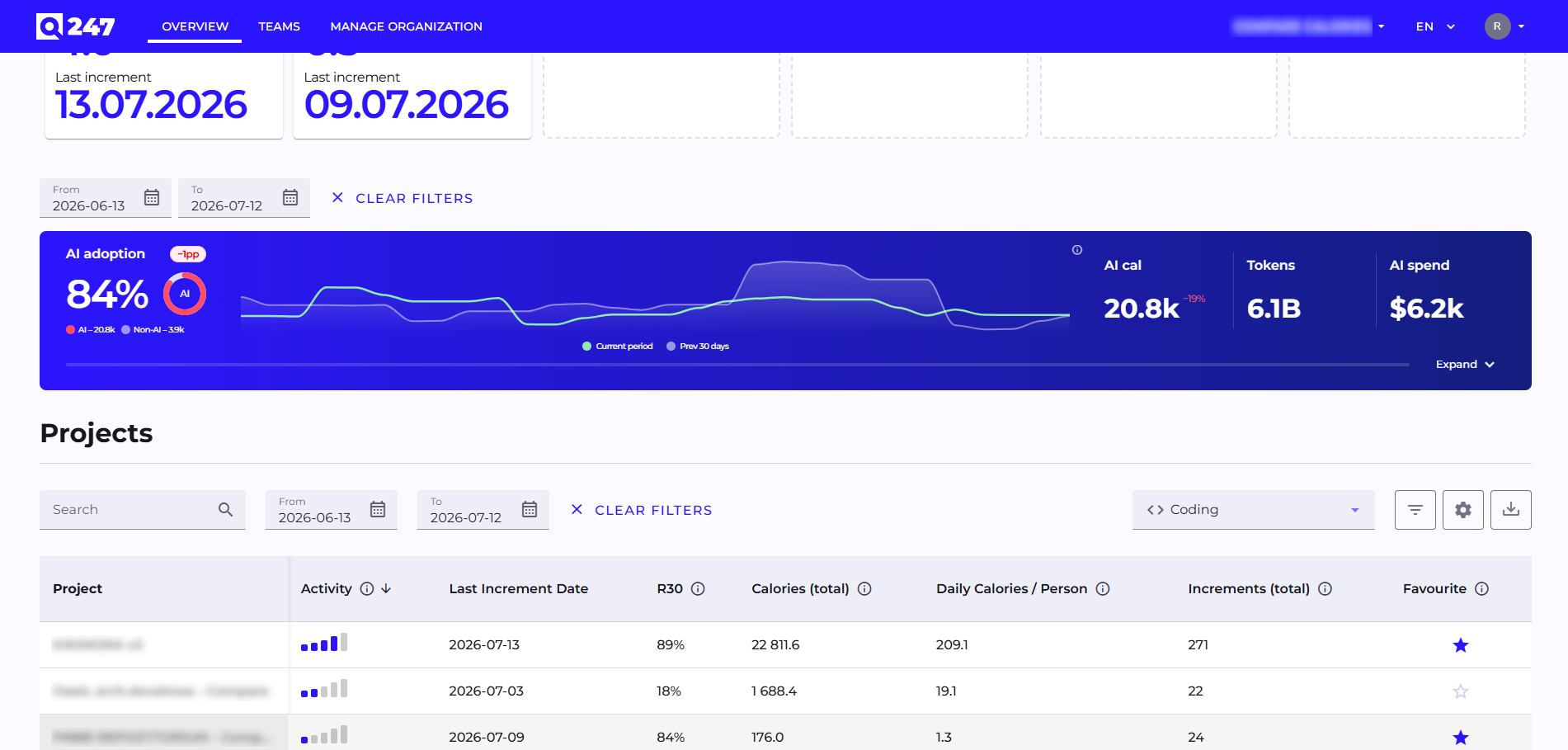
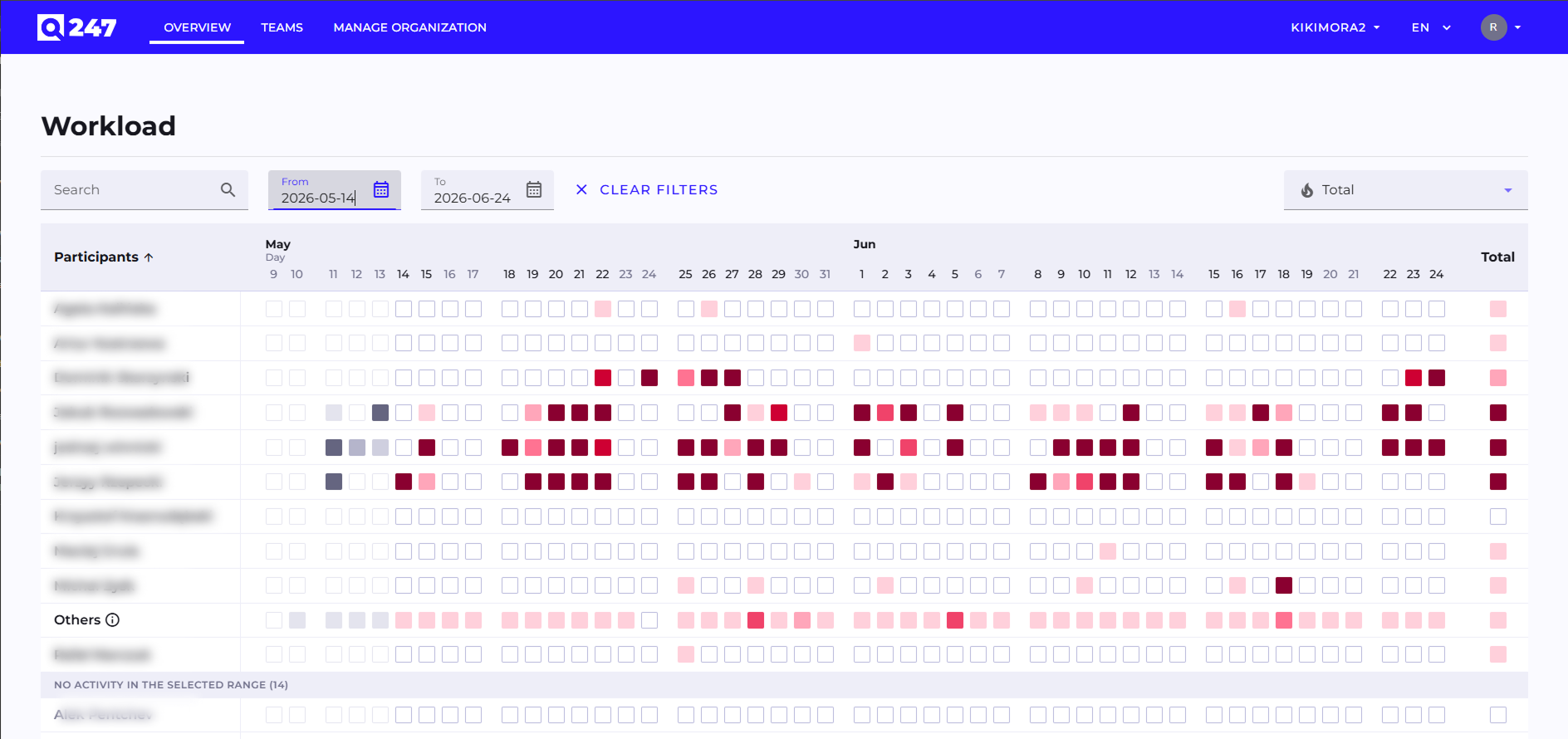
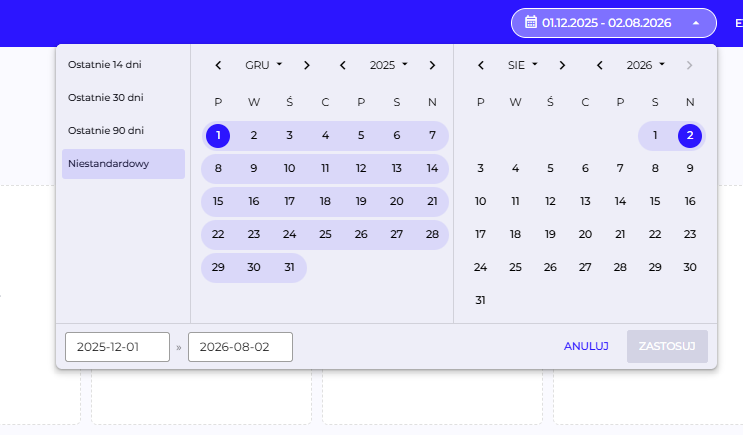
You now select the date range in a single calendar, with preset 14, 30, and 90 day ranges. The selected range applies across all views and stays remembered after refreshing the page.
Unified pagination
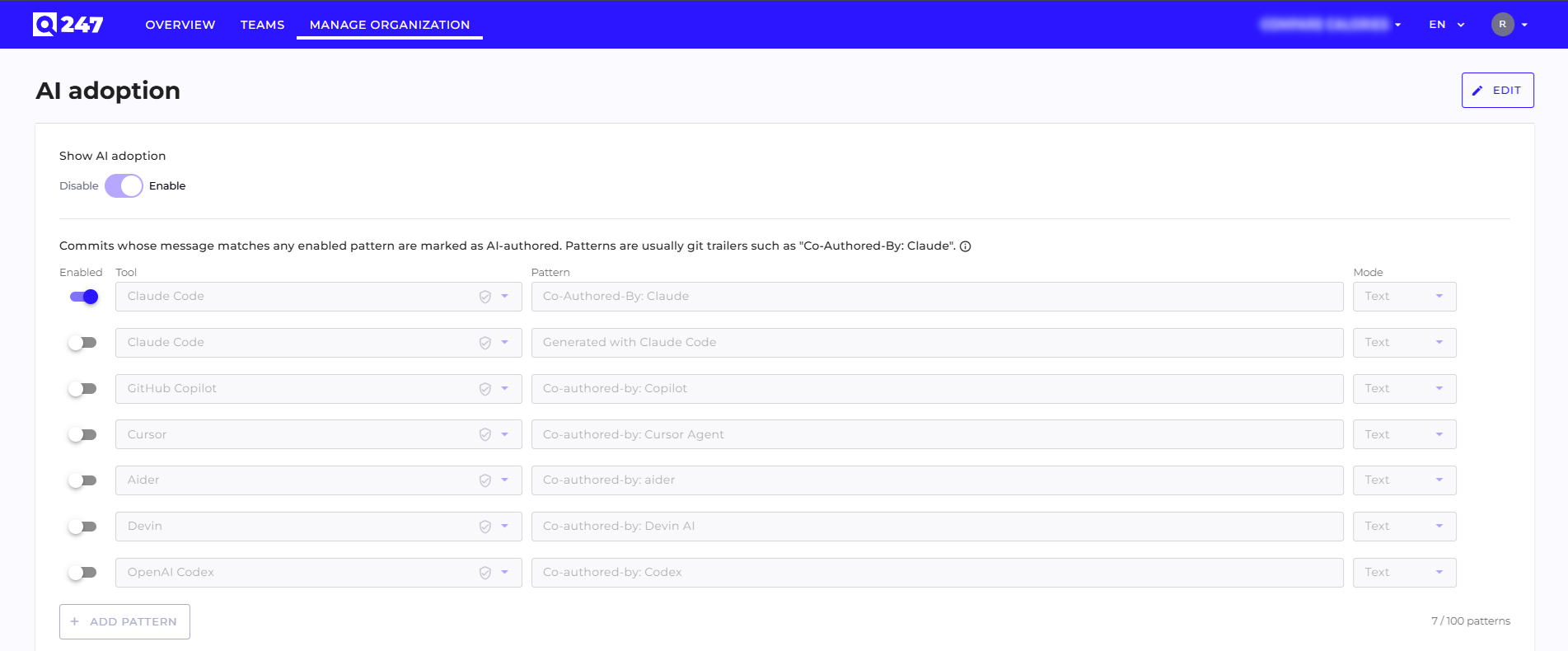
Paging through lists looks and works the same way in tables, in Workload, in Health Metrics, and in the AI Adoption panel.
Increment hiding threshold covers historical data
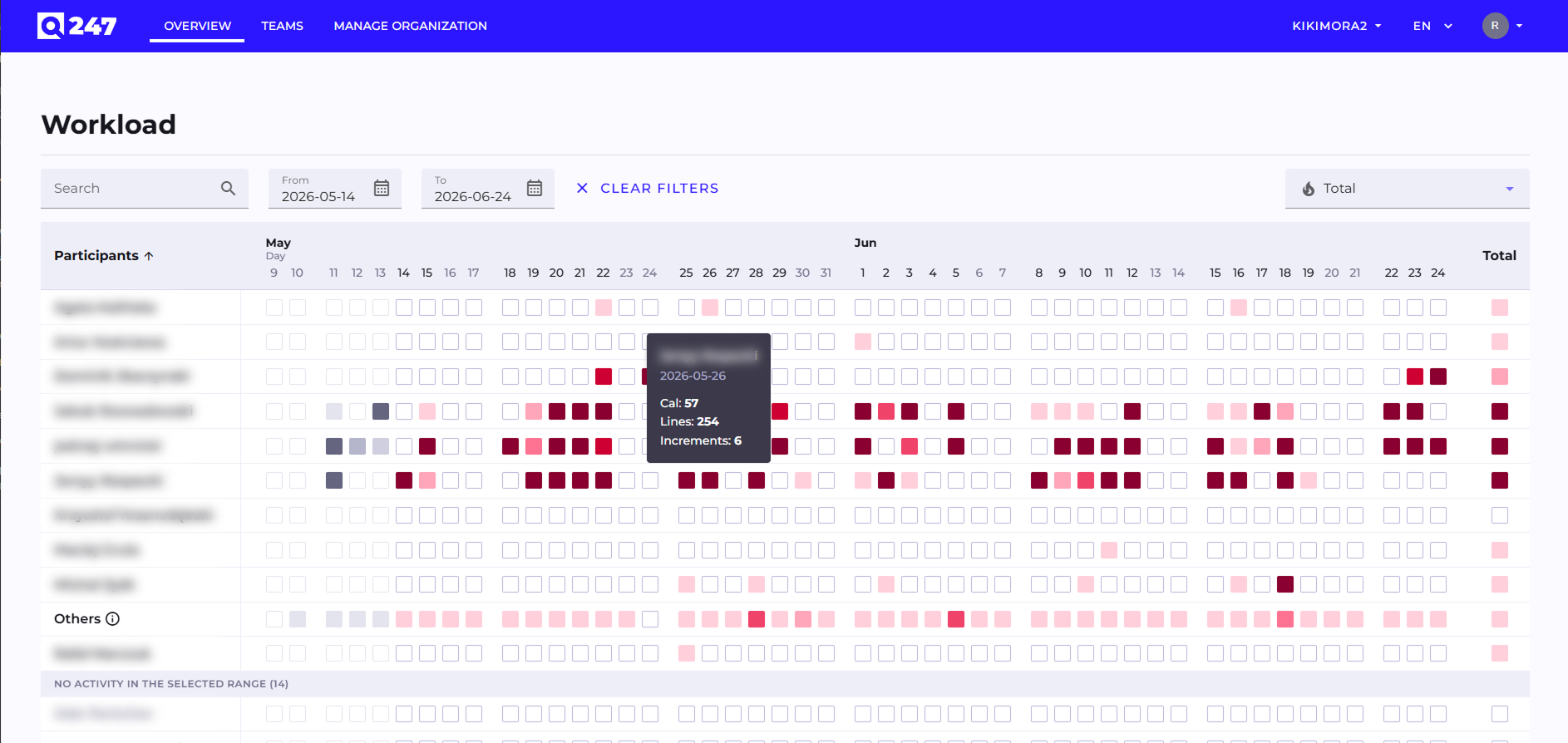
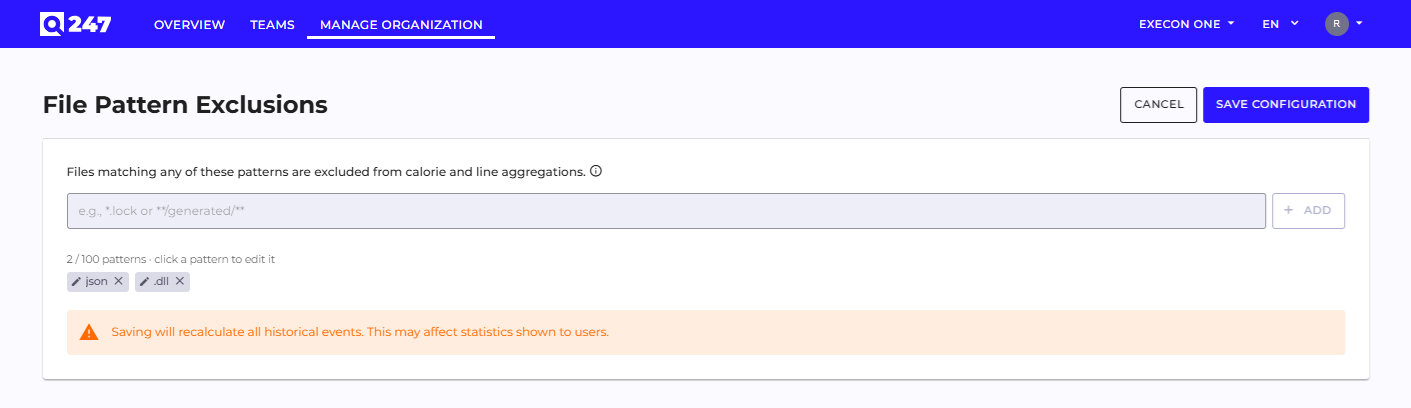
After you set the threshold, Q247 also hides increments scanned earlier. The threshold compares the value shown on the chart, meaning calories calculated after excluding the specified files.
Learn more: Effect on historical data
Removing a name from the profile is visible in all views
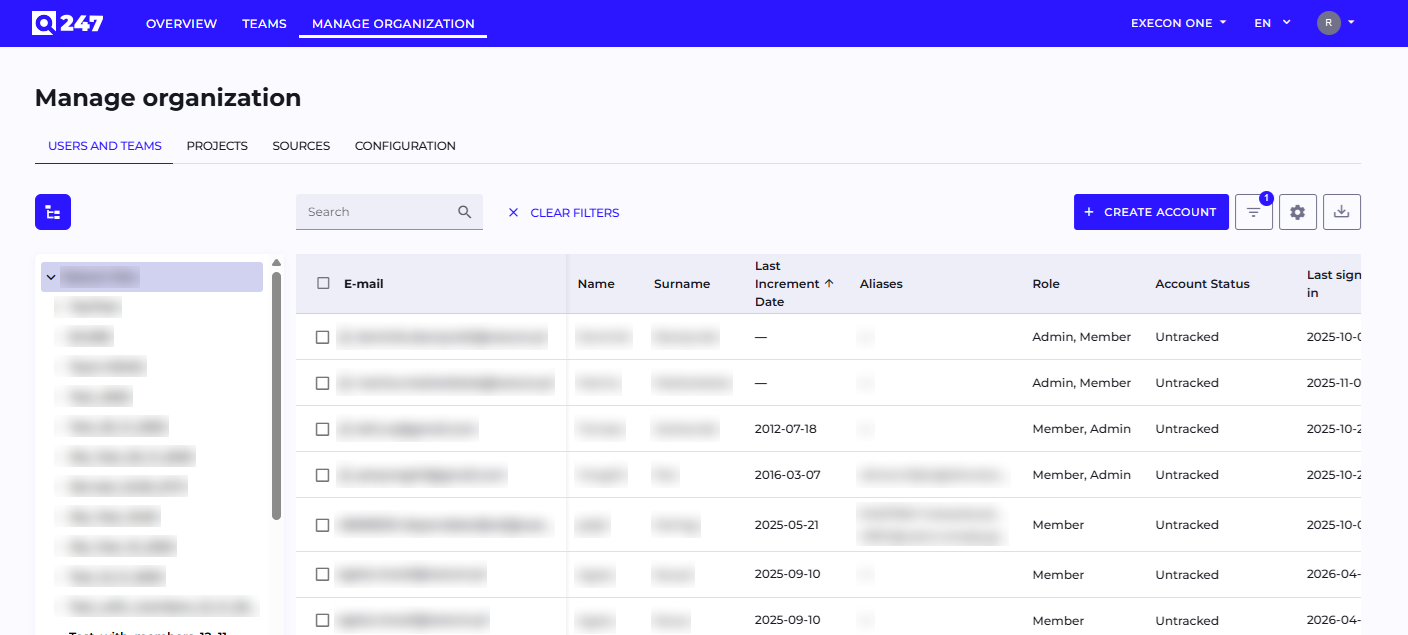
After a user's name is removed, the change appears immediately everywhere their data is shown, including the project list, participant tables, and chart legends.